
The CHAS data presented in this brief refer to people 16 and older who indicated they could not work due to a disability. People with disabilities who were working were included in the “employed” category. The CHAS does ask about disability status through other questions, though this brief focuses solely on those where their disability affected their ability to work.
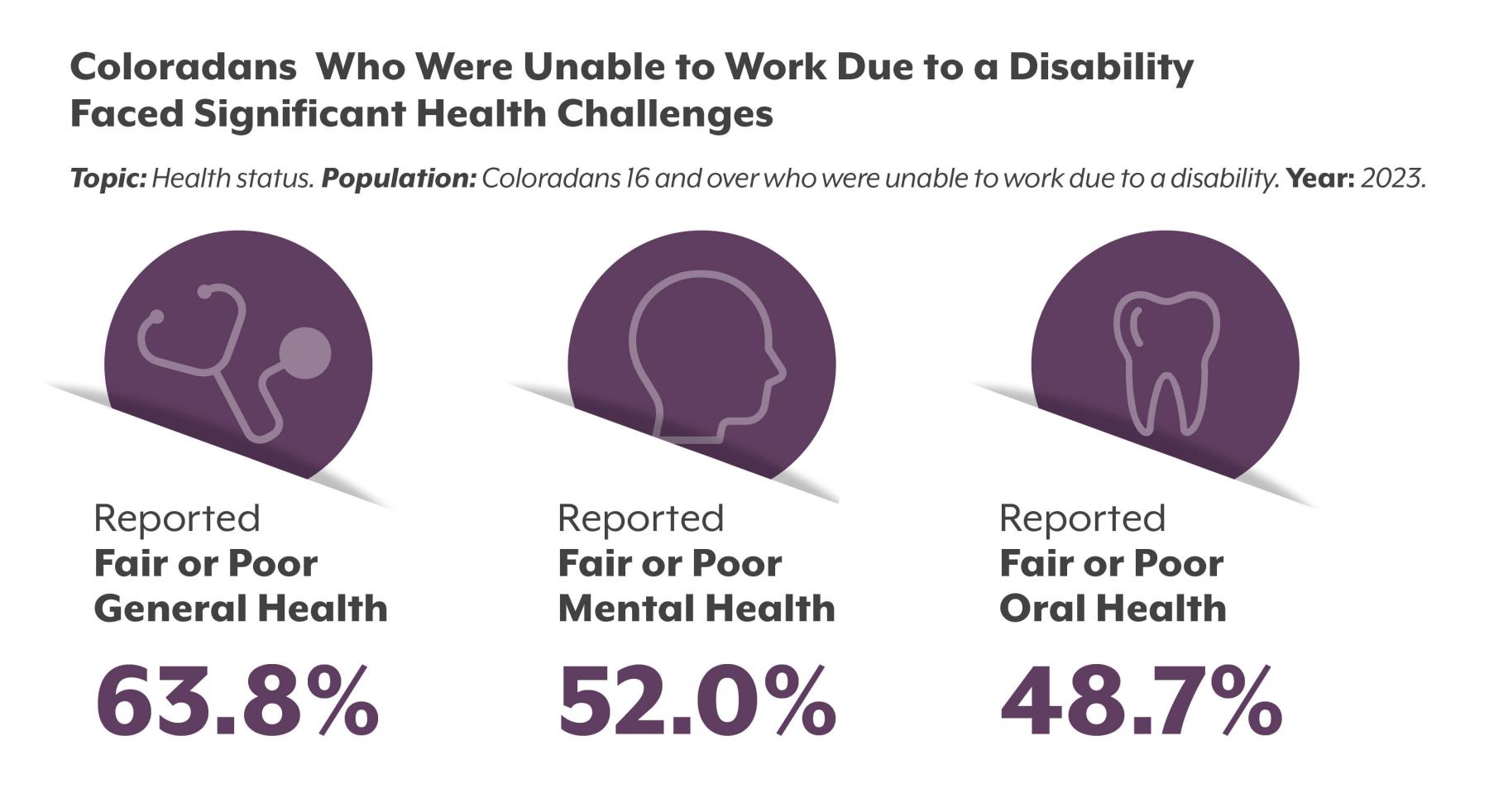
In 2023, 7.4% of Coloradans 16 and older — roughly 335,000 people — said they were unable to work due to a disability. This inability to work has serious economic implications for these Coloradans and their families. Data from the Colorado Health Access Survey (CHAS) show that these Coloradans face significant health and mental health challenges, and despite most having health insurance, they encounter significant barriers to accessing and affording appropriate care.
The U.S. Census Bureau estimates that 11% of Coloradans (or over 625,000 people) have a disability. This includes people with hearing, vision, cognitive, and ambulatory disabilities, as well as people who have difficulty with self-care or independent living due to a physical, mental, or emotional condition lasting six months or more.
Disability is complex, and there are many reasons someone may not be able to work, including physical or cognitive limitations, as well as personal or family choice. Additionally, despite the Americans with Disabilities Act requiring workplaces to provide reasonable accommodations and certain workplace protections, many employers are unwilling to provide reasonable accommodations or consider hiring people with disabilities.